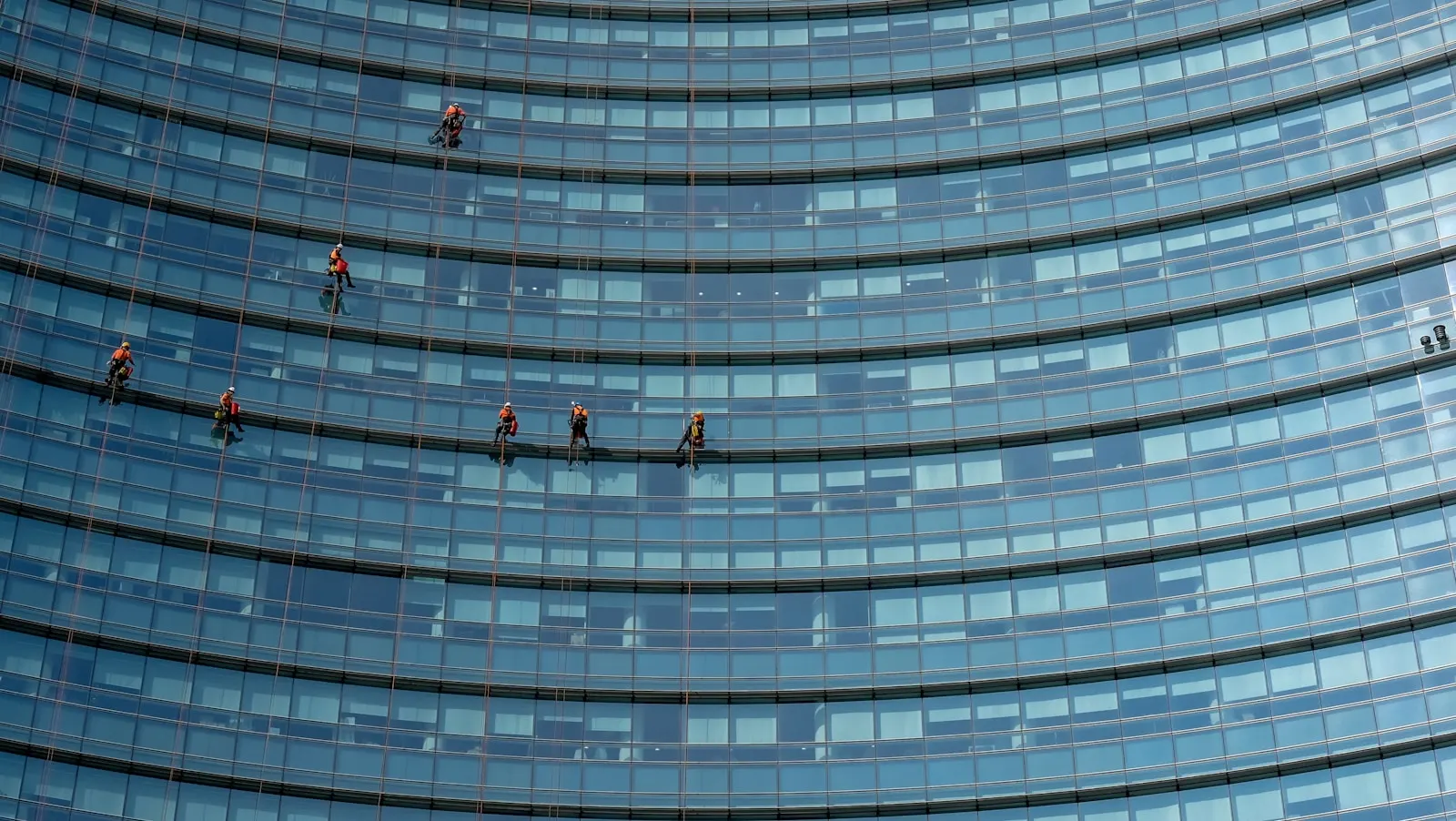
Façade Inspection & Maintenance for Singapore Buildings.
Close-range access support, defect documentation, water-ingress investigation and rope-access support — delivered by Ezzogenics for building owners, MCSTs, managing agents and facility managers preparing for their next Periodic Façade Inspection (PFI) cycle under BCA, or running façade condition checks between cycles.
- Building owners
- MCSTs & management councils
- Managing agents
- Facility managers
- Asset & property managers
A contractor team focused on the external envelope.
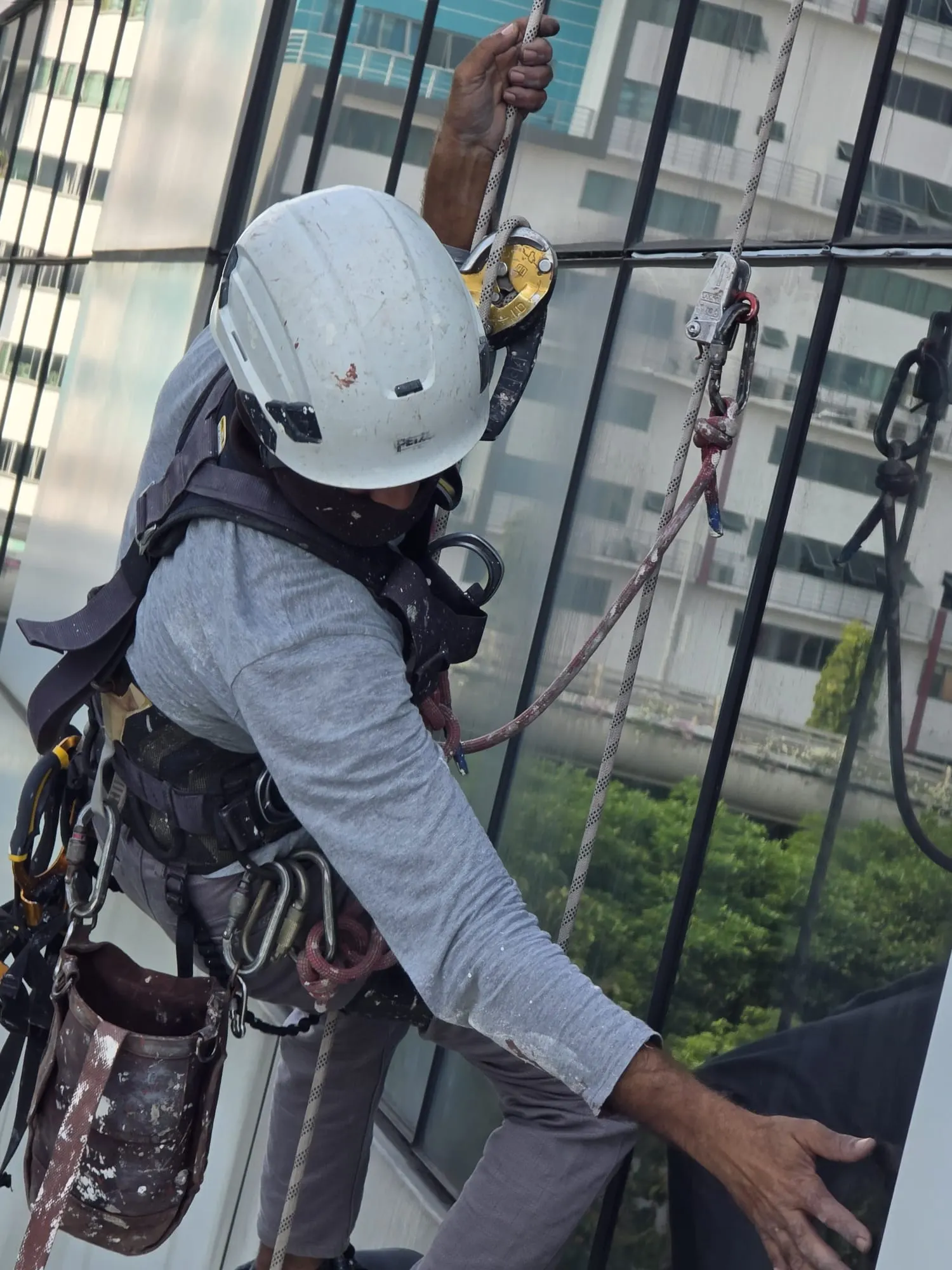
Façade Inspection Singapore is operated by Ezzogenics, a Singapore-based work-at-height contractor. We provide field and access support for Periodic Façade Inspection (PFI) — the statutory regime under BCA — and for general façade condition checks: organising safe access, conducting close-range visual checks on cladding, windows, sealants and finishes, tapping checks, photographing defects, and feeding records into the inspection report your appointed Competent Person or engineer will sign off.
We do not act as the appointed Competent Person and do not independently certify statutory PFI compliance. Building owners should appoint the required Competent Person under BCA's PFI regime; our crew, equipment and reporting workflow run under the CP, consultant or QP's direction where statutory inspection is involved.
Core services for the building envelope.
Field-focused services that map cleanly onto a façade inspection or maintenance programme.
Façade Inspection Support
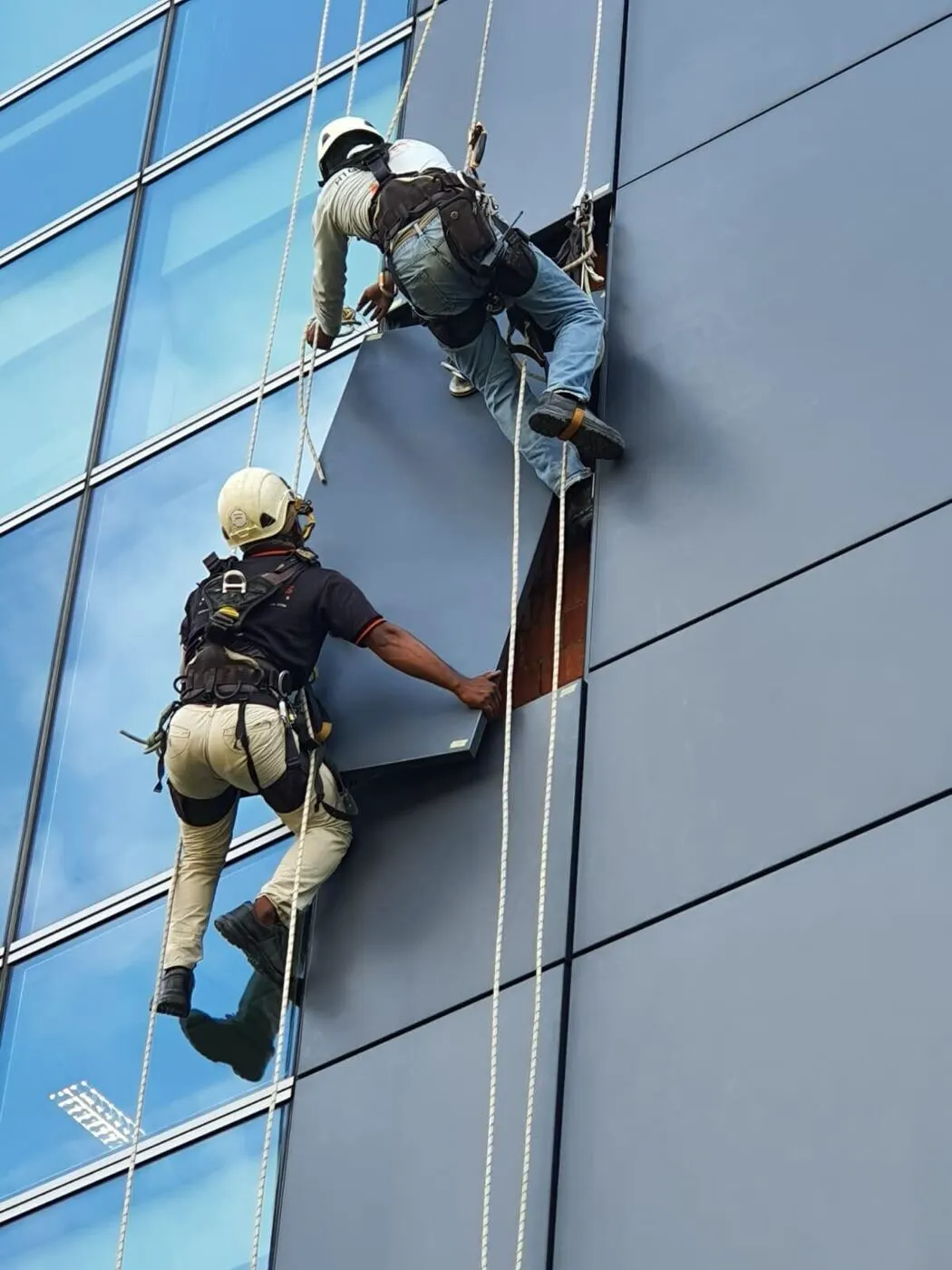
Close-range visual checks on cladding, masonry, sealants, windows and external finishes — with photographic records and defect schedules.
Learn more →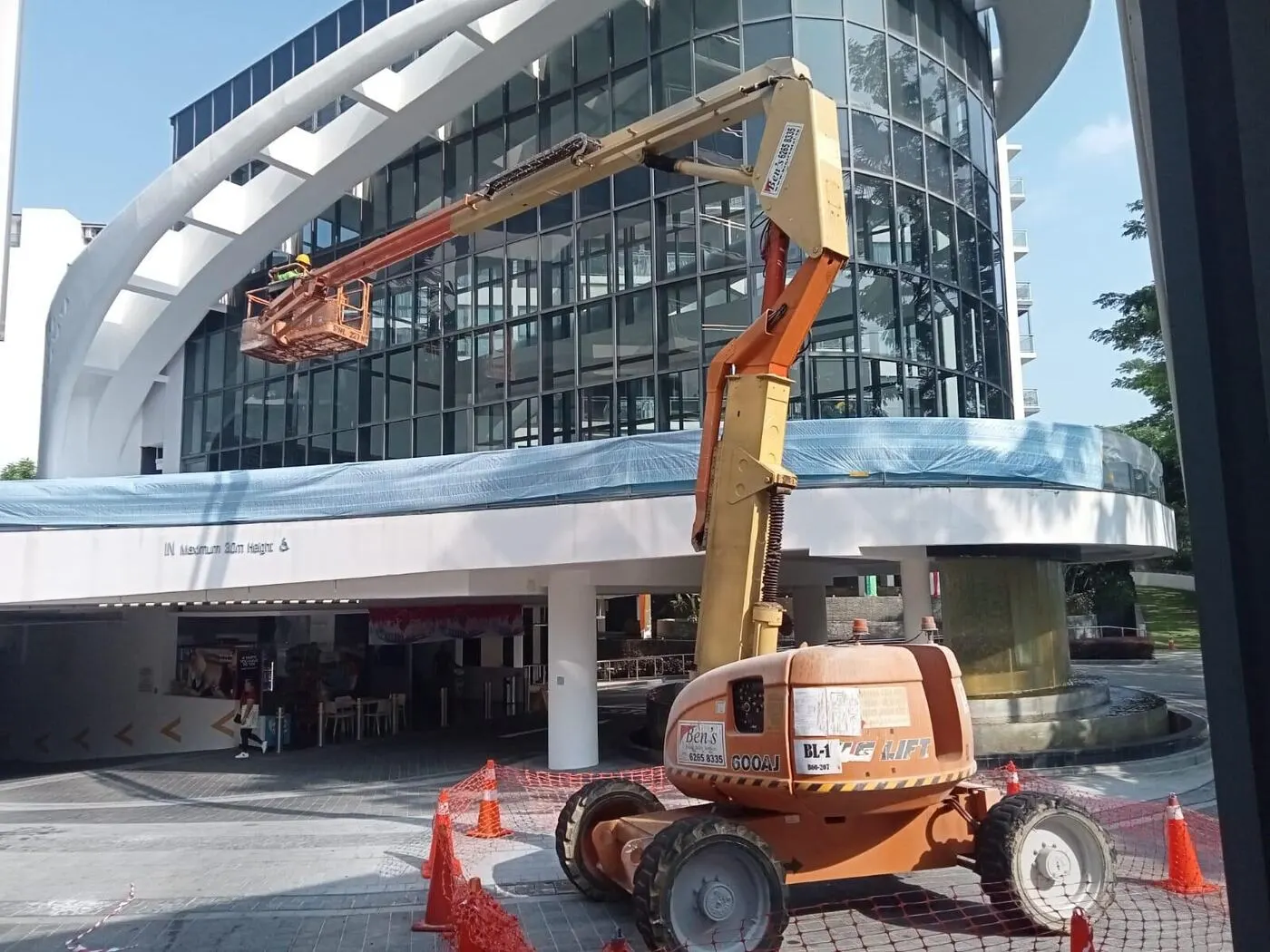
Façade Maintenance
Programmed maintenance — sealant renewal, repainting, minor cladding repair and waterproofing — carried out from safe access.
Learn more →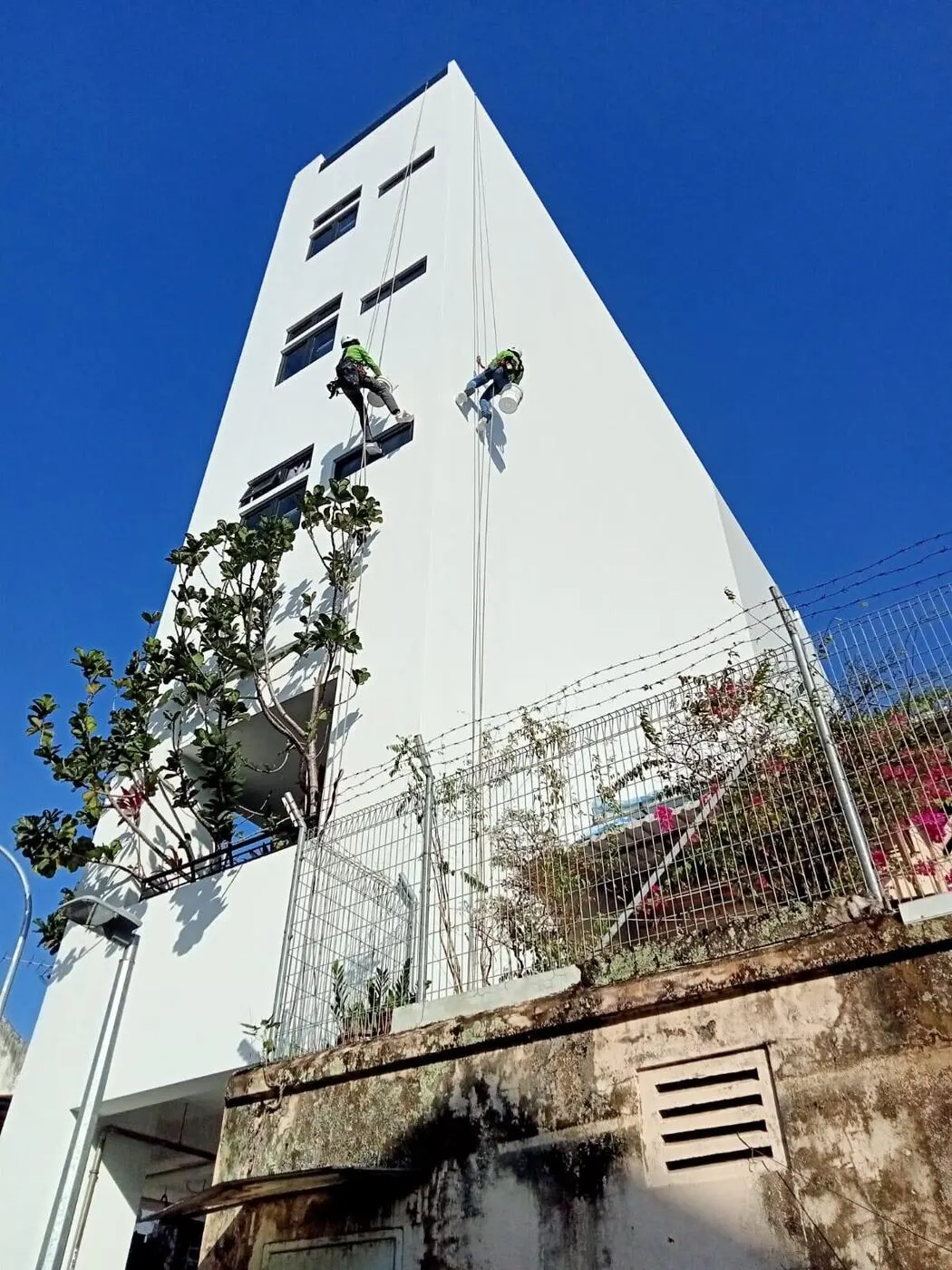
Water Ingress Investigation
Methodical leak tracing using hose tests, thermal observation and joint dissection to find the route water is taking.
Learn more →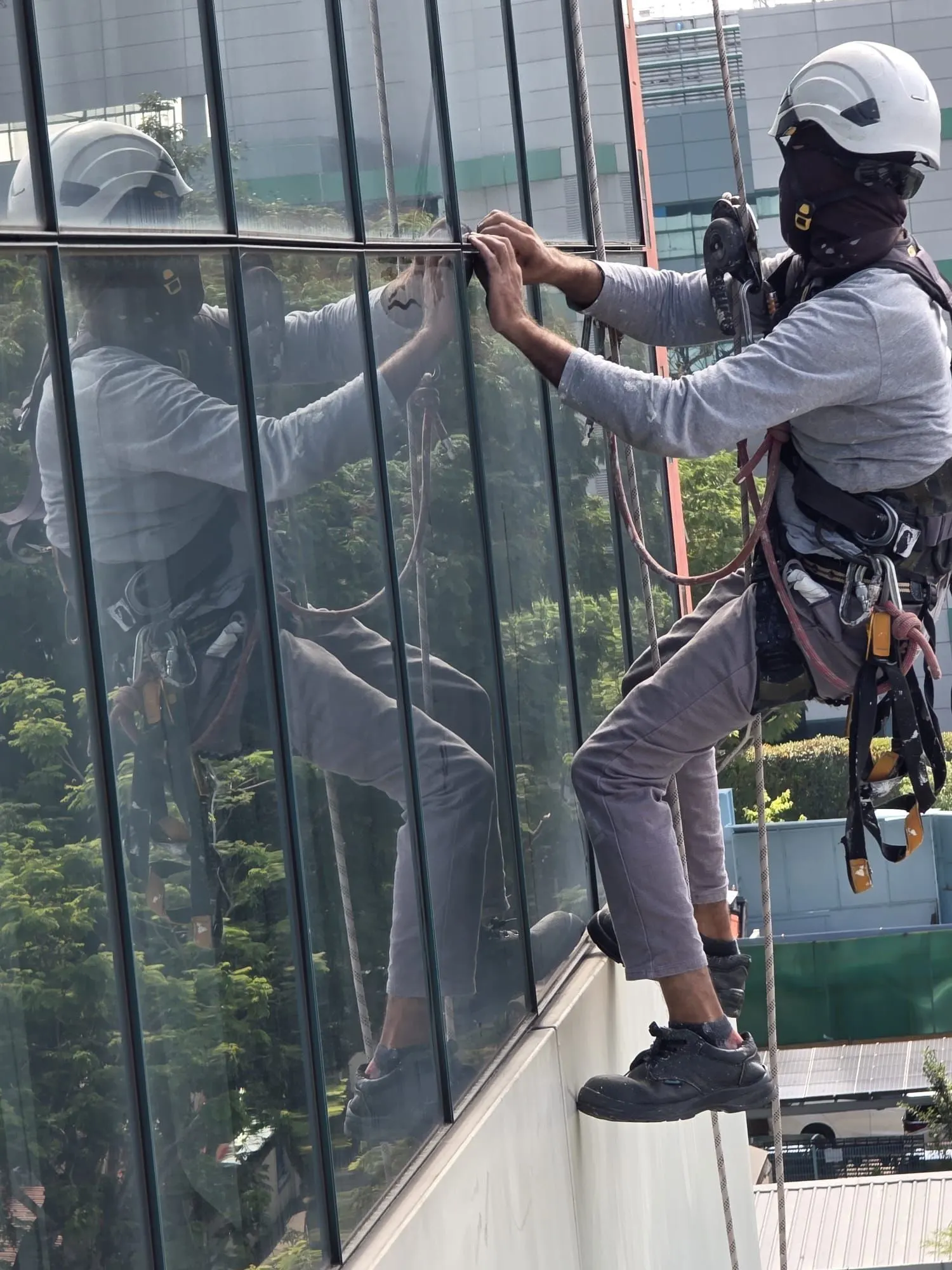
Rope Access Inspection
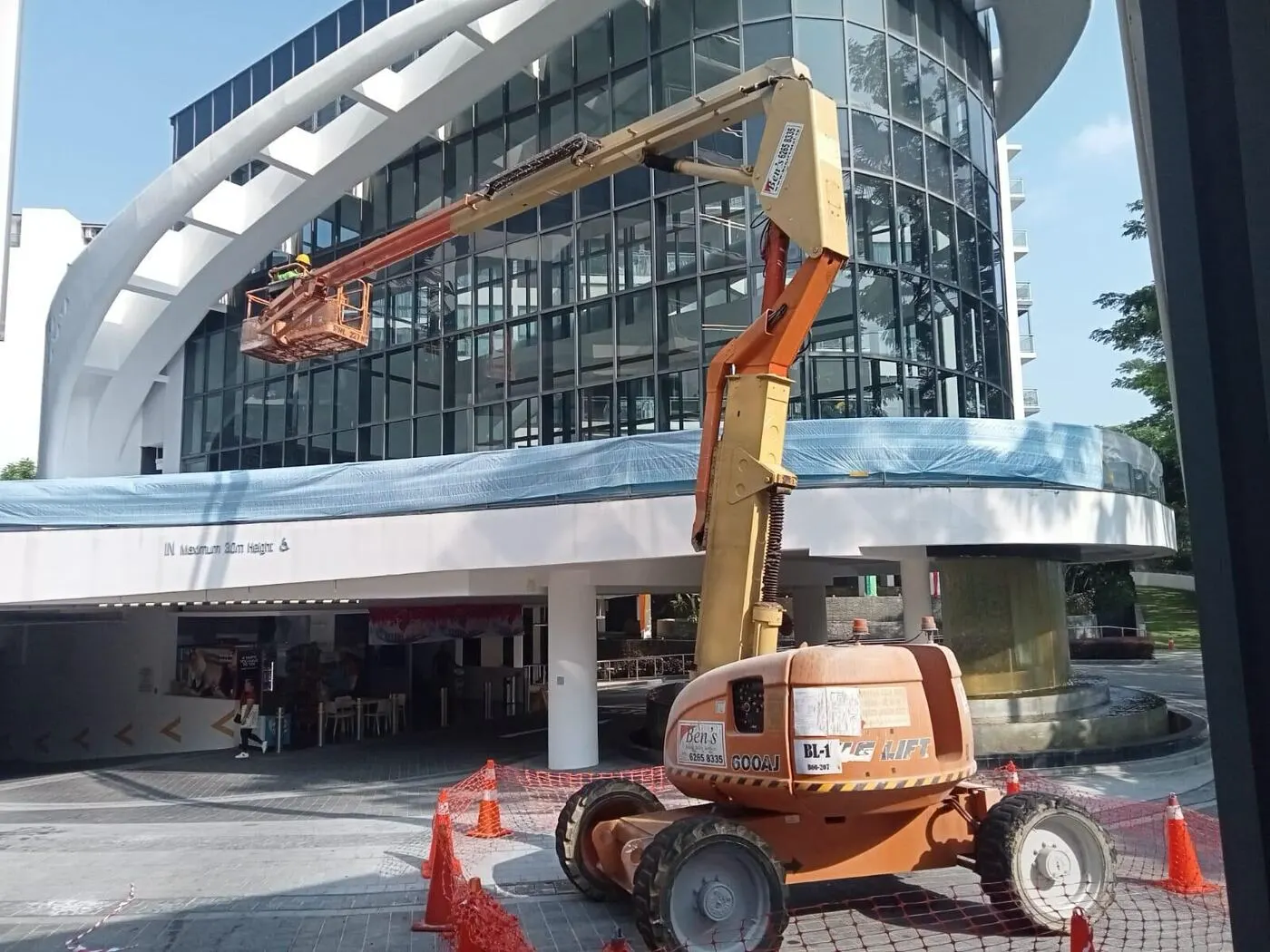
IRATA-style rope access and boom-lift teams for close-up inspection on high or restricted elevations.
Learn more →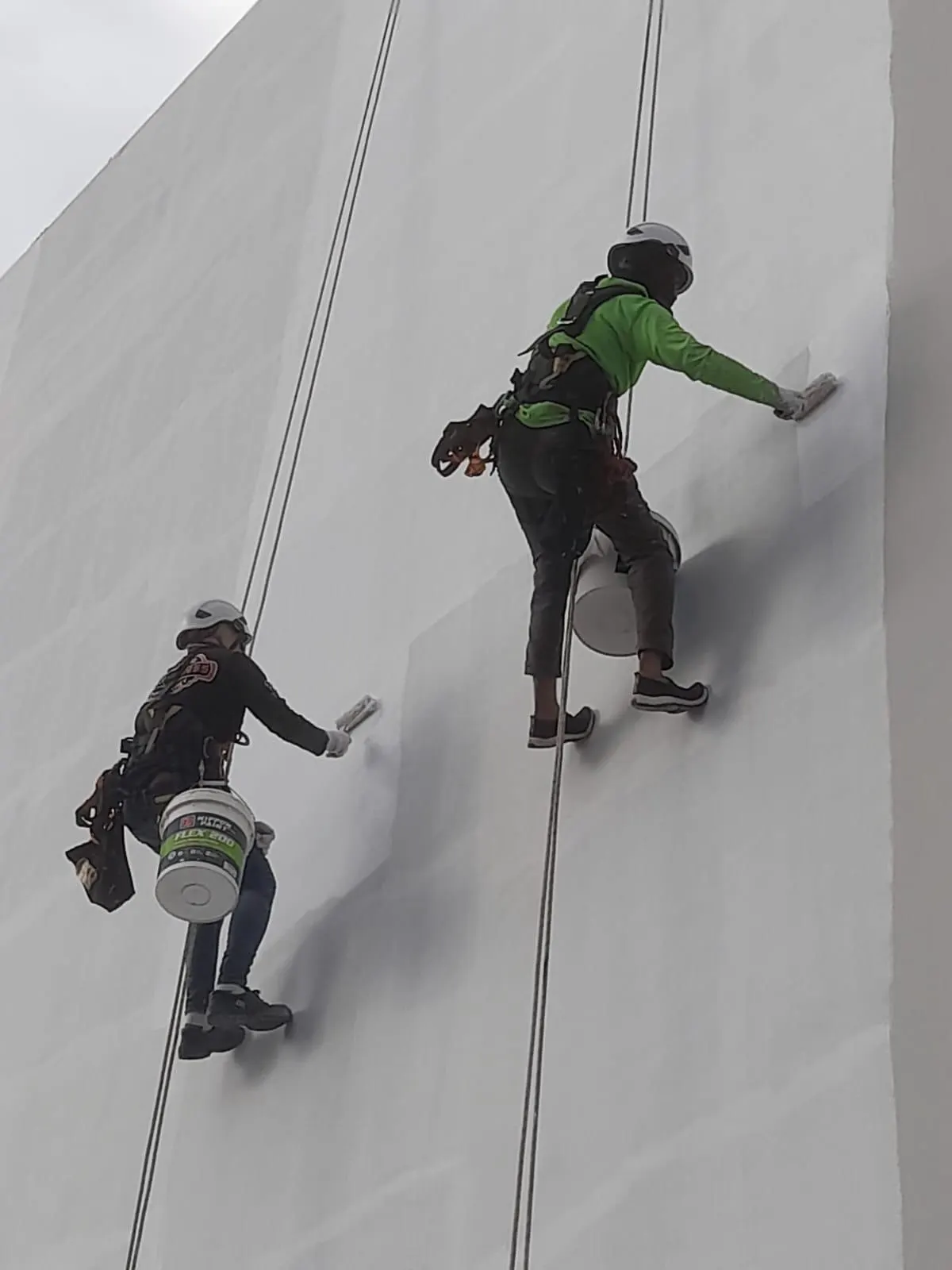
Reports & Defect Mapping
Elevation drawings, defect schedules, photographic logs and prioritised repair lists handed to your engineer or building manager.
Learn more →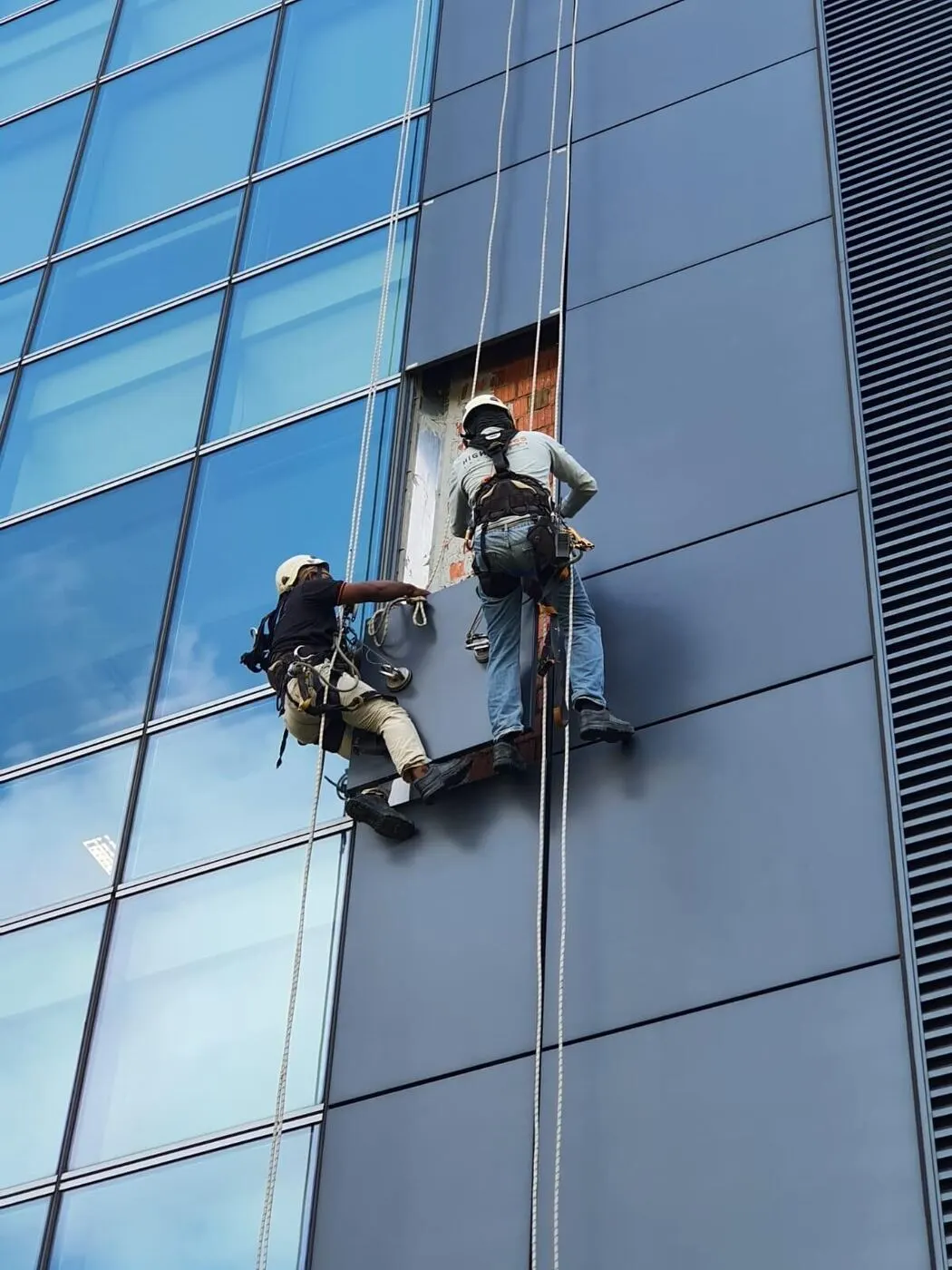
Projects
A selection of façade inspection, maintenance and water-ingress jobs we've supported on residential, commercial and industrial buildings.
Learn more →A four-step façade workflow.
Whether you're preparing for a periodic façade inspection or scoping a maintenance cycle, the workflow is consistent.
Walk-down & access plan
Site visit to establish elevations, access constraints, anchors, swing paths and an appropriate access method.
Close-range inspection
Crews carry out close-range visual checks: cladding fixings, sealant joints, windows, finishes, drips, parapets, copings.
Defect mapping & photos
Defects are logged against elevation drawings with georeferenced photos and severity notes.
Report & remediation
A structured report with prioritised actions is handed over, ready for sign-off by your engineer or Competent Person.
End-to-end, a full PFI cycle typically runs for around two months — depending on building size, access method, weather, management approvals and report scope. See the detailed process & timeline →
Built for safe work at height.
Rope access and gondola work is part of how we deliver, not a marketing slogan. Every job starts with an access plan, not a hard hat photo.
Resources on façade inspection in Singapore.
Background reading on inspection regimes, common defects and access methods. Educational only — your appointed Competent Person remains responsible for compliance.