
Façade maintenance for Singapore buildings.
Programmed maintenance on the external envelope — addressed methodically, defect by defect, from safe work-at-height access.
Why façades need a maintenance cycle
In Singapore's climate, the external envelope is under constant attack from UV, monsoon rain, salt-laden air and thermal cycling. Sealants harden and lose adhesion. Render delaminates over time. Painted finishes chalk and fade. Window gaskets shrink. Drips block with biofilm and grime.
None of these defects are dramatic on day one. Together, over a five-to-ten year cycle, they become the principal source of water ingress and the largest item in a façade inspection report.
A planned maintenance cycle reduces both the frequency of emergency repair calls and the size of the defect schedule when the next statutory Periodic Façade Inspection (PFI) is due under BCA's PFI regime.
Scope of maintenance work
Sealant renewal
Cutting out failed sealant beads at window perimeters, panel-to-panel joints, slab edges and copings, and re-installing to the appropriate grade.
Exterior painting
Spot priming, crack filling and full-elevation repainting using exterior-grade systems. Colours matched to existing schemes where required.
Waterproofing
Liquid-applied waterproofing on parapets, gutter beds, planter boxes and slab-to-wall junctions. Hairline crack injection where appropriate.
Minor cladding repair
Re-securing loose panels, replacing fixings, repointing stone or rendering small areas where panels are missing or damaged.
Render & plaster repair
Cutting out hollow render, re-rendering and refinishing — particularly on older masonry façades where delamination is widespread.
High-level cleaning
Pre-inspection or pre-painting cleaning of façades, drips, copings and glazing. Removes biofilm, salt deposits and grime that obscure defects.
Access methodology
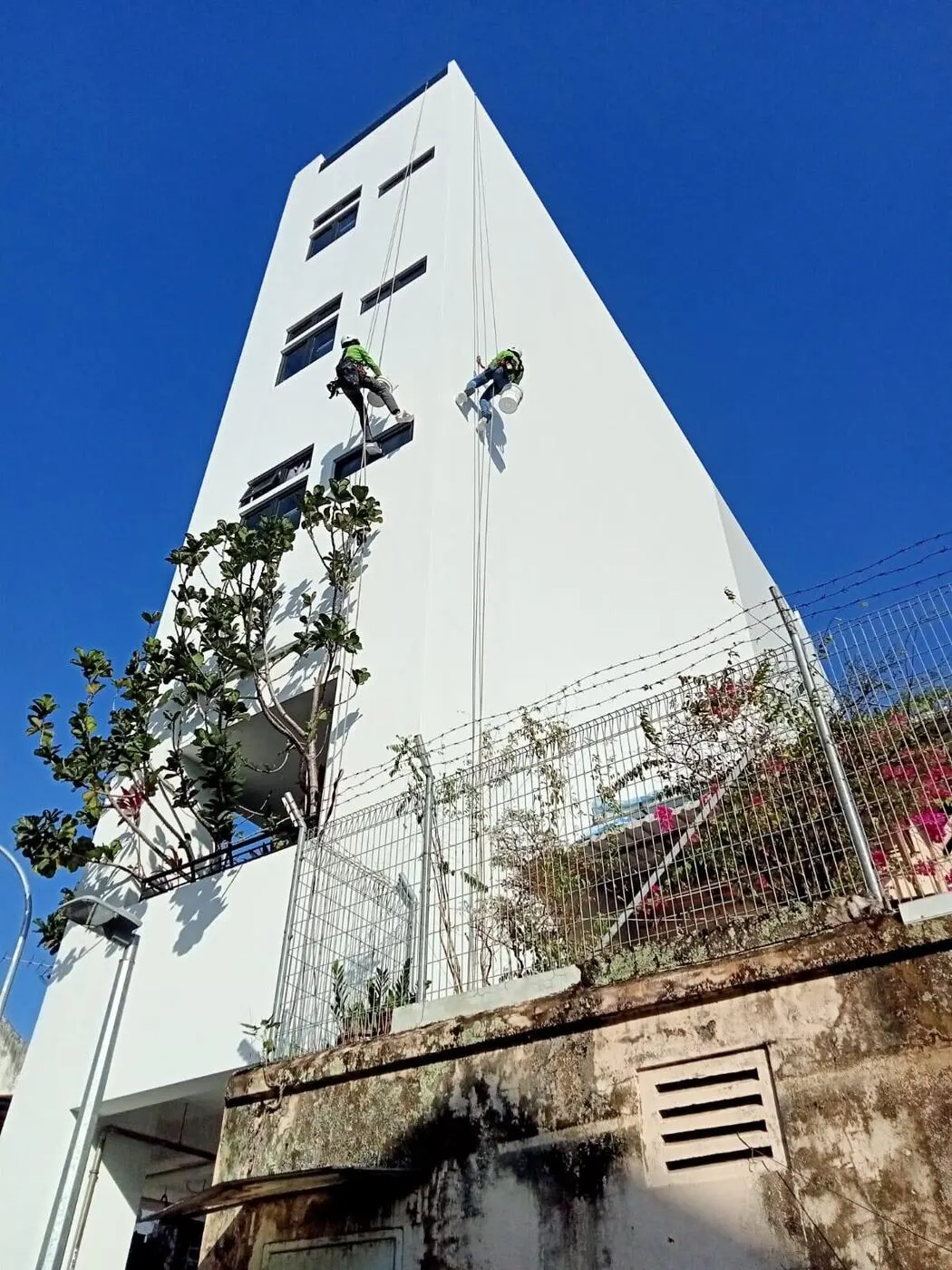
Maintenance work that looks identical from the ground can carry very different risk profiles depending on access. A sealant joint at 10 metres reached from a boom lift is a different job to the same joint at 40 metres reached on rope access.
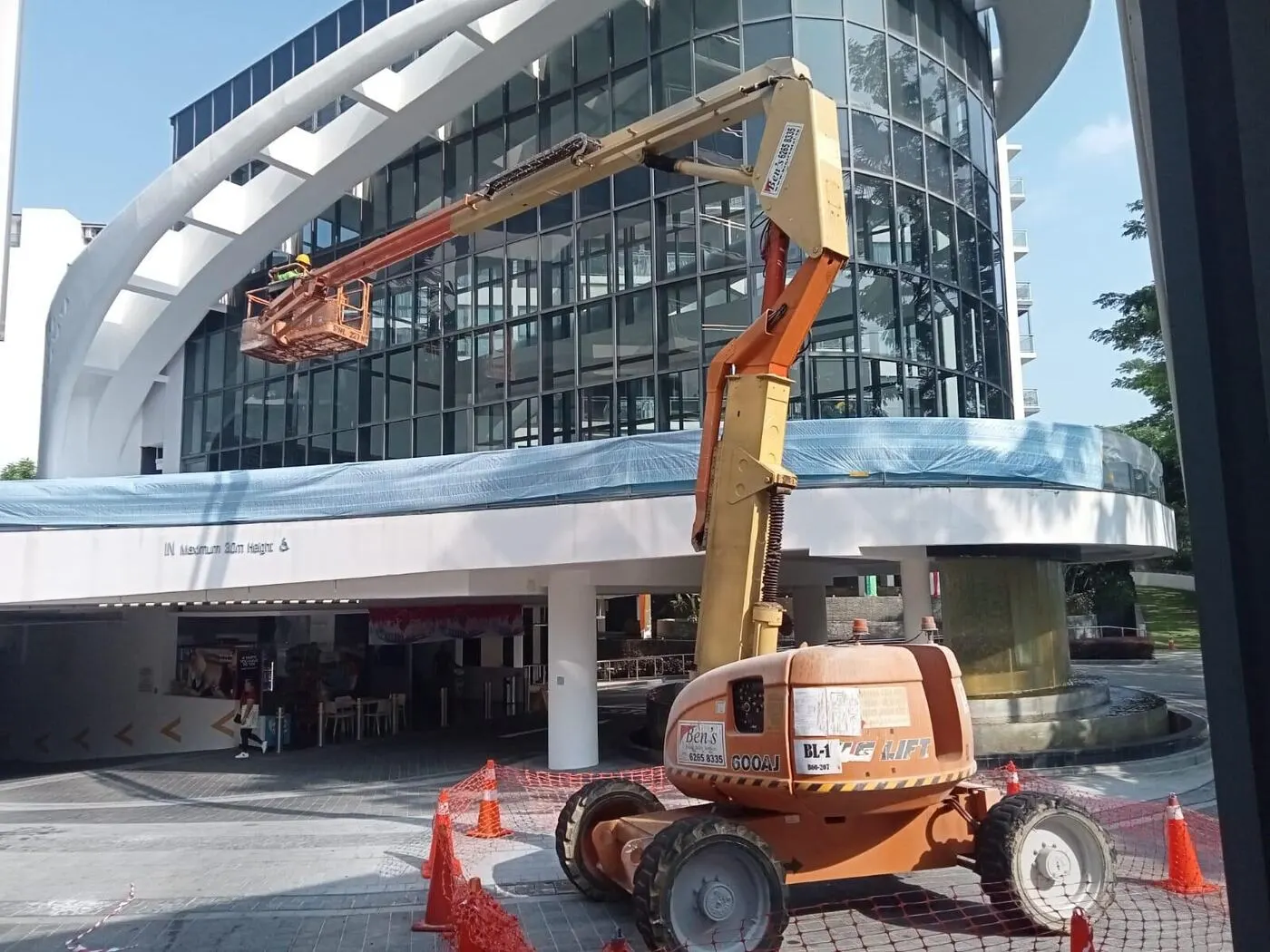
We choose access by elevation and task — boom lift for low-rise frontages, gondola for repetitive vertical work on tall buildings, rope access for spot repairs and tight spaces. Each access method is reviewed against a written risk assessment and method statement before mobilisation.
This is the same access discipline that supports our PFI field-support and façade condition-check work — the methodology is shared across both services.